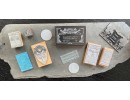
Bookplate Ex Libris: Venus, Mars and Cupid in Vulcan’s forge
This bookplate features a classical depiction of the famous relief ‘Venus, Mars and Cupid in the Forge of Vulcan’ by the Danish sculptor Bertel Thorvaldsen (originally designed in 1810).
The scene draws on a central love triangle from Greco-Roman mythology:
Figures depicted (from left to right)
Vulcan (Greek: Hephaestus). The god of fire and the art of smithing stands on the left by the anvil, recognisable by his characteristic craftsman’s cap (pileus) and hammer. He is forging glowing arrows of love for his wife, which symbolise his own passionate affection.
Venus (Greek: Aphrodite). The goddess of love sits in the centre of the picture, accompanied by two doves at her feet. She impassively cools her husband’s freshly forged arrows in a bowl of water, expressing her emotional detachment from him. Instead, her gaze is turned longingly to the right.
Cupid (Greek: Eros). The winged god of love stands between Venus and Mars. In one hand he holds the god of war’s long spear, whilst with the other he receives an arrow.
Mars (Greek: Ares). The god of war stands on the right, having laid aside his helmet and shield, and is handing an arrow to Cupid. This symbolises the secret and mutual love affair between him and Venus, which is taking place directly behind the back of the labouring Vulcan.
Artistic background
Bertel Thorvaldsen created the original relief in Rome in the classical style, which draws heavily on the formal language of ancient Greece. This print is a modern black-and-white redrawing of this marble relief from the Thorvaldsen Museum in Copenhagen, with a blank text box added at the bottom for captions.
Art History: Bertel Thorvaldsen and Classicism
Bertel Thorvaldsen (1770–1844) was regarded, alongside the Italian Antonio Canova, as the most important sculptor of the Classical period in Europe:
Ancient stylistic language. The work is a prime example of austere Classicism: all the figures are arranged on a single plane, as if on an ancient frieze. The clear contours, the calm, controlled posture even within an emotionally charged scene (‘noble simplicity and quiet grandeur’) and the flowing folds of the robes draw directly on Greek vase paintings and reliefs.
A popular motif. The love triangle involving Mars, Venus and Vulcan had been a popular subject since the Renaissance (as seen, for example, in the works of Botticelli, Tintoretto and Velázquez) because it illustrates the philosophical contrast between war and love, and between physical strength and cunning craftsmanship. Thorvaldsen’s version became famous throughout Europe in the 19th century thanks to numerous plaster casts and copperplate engravings.
Bookplate Ex Libris: Venus, Mars and Cupid in Vulcan’s forge
- Hersteller EXLIBRIS INSEL
- Artikelnr. el_venus-mars-amor
- Verfügbarkeit Lagernd
-
140,00€ *
- Netto 117,65€
- Steuer 22,35€
Mögliche Optionen
Ähnliche Produkte

Ex Libris the fisherman and his soul
Ex Libris Art Nouveau motif after Heinrich Vogeler, the fisherman and his soul♥ A nice bookplate&nbs..
140,00€ * Netto 117,65€

Bookplate Ex Libris afer William Thomas Horton, the Norns
Bookplate Ex Libris Art Nouveau motif after William Thomas Horton, the Norns♥ A nice bookplate ..
140,00€ * Netto 117,65€
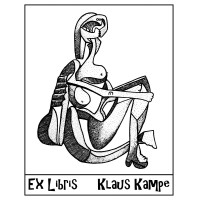
Bookplate Ex Libris art, sitting bather
Bookplate Ex Libris after Picasso, the seated bather♥ A nice bookplate from our category art a..
140,00€ * Netto 117,65€

Bookplate Ex Libris art surrealism Magritte
Bookplate Ex Libris after René Magritte, the therapist♥ A nice bookplate from our category art..
140,00€ * Netto 117,65€
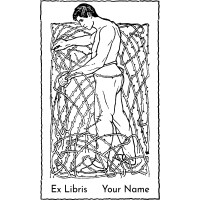
Bookplate Ex Libris Art Nouveau man in thorns
Bookplate Ex Libris man in thorns♥ A nice bookplate from our category art-déco and symbolism.&..
94,00€ * Netto 78,99€
Bookplate Ex libris: the farmer from Nice giving alms
Bookplate Ex libris: "The Peasant from Nice Giving Alms", based on a painting by Hercule Trache..
140,00€ * Netto 117,65€
Schnellsuche bookplates, stamps, symbols, allegory, Thorvaldsen, art, illustration, paintings, Venus, Mars, Cupid